No products in the basket.
Cart
3D Printing SLA: high resolution and smooth resin surface.
Professional SLA 3D printing 3D printing service with in-house production in Valencia. Resolution down to 25 µm, near-polished surface and specialised resins for jewellery, miniatures and visual prototypes.
25 µmMin. resolution
220×220×220Max. vol. (mm)
±0,1 mmTolerance
SLA · MSLAUV curing 405 nm
Layer 87/240 · 25 µm405 nmUV Laser
25 µmMin. layer
±0,1 mmTolerance
25-micron resolution10× better than FDM
Near-polished surfaceNo staircase effect
+12 technical resinsStandard · Tough · Castable
Post-processing includedWashing + UV curing
WHAT IS SLA 3D PRINTING
Stereolithography: UV light that cures liquid resin layer by layer.
SLS SLA 3D printing (Stereolithography Apparatus) is the oldest additive manufacturing technology, patented in 1984 by Chuck Hull, founder of 3D Systems, and the one offering the highest resolution and best surface finish of all plastic technologies.
Its principle is elegant: a vat of photosensitive liquid resin and an ultraviolet light source — a 405 nm laser in classic SLA or an LCD screen in MSLA and DLP variants — that selectively cures the resin layer by layer. The part hangs from a platform that rises as each layer forms below.
The result is parts with layers as thin as 25 microns, details impossible for FDM and a surface so smooth it barely needs post-processing. At Imprimakers we use high-precision SLA and MSLA printers, with a catalogue of over 12 certified resins.
QUICK TECH SPECS
Physical principleUV photopolymerisation
Maximum volume220×220×220 mm
XY resolution25 – 100 µm
Minimum layer25 µm
Typical tolerance±0,1 mm or 0.2%
Relative cost€€ (intermediate)
HOW SLA PRINTING WORKS
The SLA 3D printing process, step by step.
SLA requires more process control than FDM: the resin needs post-washing and curing. Working with a professional service makes all the difference in the final result.
STEP 01 · PREPARATION
Orientation and supports
We orient the part to minimise supports on visible surfaces. We generate thin point-contact supports for clean, mark-free removal.
STEP 02 · CURING
UV laser cures the resin
The UV laser (405 nm) selectively scans the resin layer by layer, solidifying only the points that form the part. The platform rises microns and repeats until complete.
STEP 03 · WASHING
Washing in isopropyl alcohol
The part comes out impregnated with uncured resin. We wash it in IPA for 10 to 20 minutes to remove all liquid resin residue and achieve the final clean surface.
STEP 04 · FINAL CURE & DISPATCH
UV post-cure, QA and dispatch
We pass the part through a UV curing chamber so the resin reaches its final mechanical properties. We remove supports, inspect tolerances and ship across Spain and Europe.
ADVANTAGES & LIMITATIONS
Why choose SLA... and when it is not the best option.
SLA shines in applications where detail, finish and precision are critical. But it has real limitations in size, strength and cost per part.
Advantages Pros
-
Maximum detail resolutionDown to 25-micron layers. Reproduces textures, fine lettering, ornamentation and geometries no other technology can match.
-
Smooth, near-polished surfaceNo visible staircase effect. Ideal for aesthetic parts to photograph, display or use as a mould master.
-
Very tight tolerances±0.1 mm or 0.2%. Suitable for mechanical fits, press-fits and parts that must mate with other components.
-
Unique specialised materialsCastable resins for jewellery, optical clear, high-temperature and silicone-like 40A.
-
Mechanical isotropyParts are equally strong in all directions, unlike FDM. There is no weak plane between layers.
-
Watertight parts, no porosityNo inter-layer porosity. For hermetic containers, fluid channels or sealing parts.
Limitations Cons
-
Limited print volume220×220×220 mm is the standard. For larger parts split and bond, or use FDM which reaches 500×500×500 mm.
-
Higher cost per gramResins cost more than FDM filament. For large, robust parts, FDM or SLS are more cost-effective.
-
More brittle than FDM partsStandard resins are rigid but brittle. Tough resins improve significantly but do not reach nylon toughness.
-
UV degradation outdoorsProlonged sunlight degrades resins. For outdoor use, we recommend UV-primer paint or switching to FDM in ASA.
-
Supports on visible surfacesSupports leave micro-imperfections when removed. For a perfect finish, correct orientation and post-sanding are needed.
-
Mandatory post-processingIPA washing and UV curing add time to the process. We handle it all in-house before shipping the finished part.
TECHNICAL SPECIFICATIONS
Capabilities of our SLA service.
Manufacturing parameters we apply by default at Imprimakers. On request we can adjust resolution, orientation or resin for your project.
MAX. VOLUME
220×220×220 mm
Standard. For larger parts we split and assemble in-house.
LAYER HEIGHT
25 – 100 µm
25 µm for maximum detail · 50 µm standard · 100 µm for volume.
TOLERANCE
±0,1 mm
or ±0.2% of the dimension. Fine mechanical fits possible.
MINIMUM WALL
0,4 mm
Supported. Cantilevered walls minimum 0.8 mm.
MINIMUM DETAIL
0,15 mm
Positive features. Embossed text legible from 0.3 mm.
RESINS
+12 resinas
Standard, Tough, Castable, Flexible, Clear, High-Temp…
FILE FORMATS
STL · STEP · OBJ
Also STP, IGES, IGS, ZIP. Up to 200 MB per file.
LEAD TIME
3 working days
Average from order confirmation. Includes washing and curing.
AVAILABLE RESINS
+12 technical resins for 3D printing SLA.
Unlike FDM, each SLA resin has a unique chemical formulation optimised for a specific application: jewellery, visual, functional or flexible.
SLA · STANDARD
Standard Resin
La opción versátil para prototipos visuales y modelos de concepto. Buen detalle, superficie lisa, fácil de pintar y postprocesar. Colores: gris, blanco, negro y translúcido.
Grey · white · black · translucent
SLA · ENGINEERING
Tough / ABS-like Resin
Simulates ABS properties: high impact resistance, toughness and machinability. For functional prototypes under stress and press-fit assemblies.
Grey · black
SLA · OPTICAL
Clear / Transparent Resin
Optical transparency after polishing. For parts that reveal the interior, fluid prototypes, optics and displays. Can be polished to full transparency.
Crystal clear
SLA · JEWELLERY
Castable Resin
Designed for lost-wax casting. The part burns out without residue, leaving a perfect mould for casting gold, silver or bronze.
Purple · blue
SLA · HIGH TEMP.
High Temp Resin
HDT up to 238 °C. For low-run injection moulds, heat-exposed prototypes, thermoforming tools and parts near engines.
Brown
SLA · FLEXIBLE
Flexible / Elastic 50A Resin
Behaves like soft silicone or rubber. For grips, gaskets, overmoulds, footwear prototypes and parts with repeated flexion.
Black
SLA · PRO GRADE
Rigid 10K Resin
10× stiffer than standard, with a tensile modulus of 10,000 MPa. For instrument housings, precision supports and inspection jigs.
Industrial grey
SLA · SPECIAL
OTHERS · ON REQUEST
ESD (dissipative) resin, ceramic, real 40A silicone, colorimetric indicator and next-generation resins. Request in your order.
varies by resin
APPLICATIONS BY SECTOR
Applications of SLA.
SLA stands out where detail, finish and special materials are decisive. The sectors that hire us most are jewellery, product design and detailed architecture.
Jewellery and goldsmithing
Castable models for lost-wax casting. The SLA part replaces the hand-carved wax model: faster, repeatable and with detail impossible by hand.
- Rings and pendants
- Castable models
- Short-run jewellery series
Miniatures and figures
Wargames, collectible figures, scale modelling. The 25 µm resolution captures every fold, texture and micro-detail of the digital sculptor.
- Wargame miniatures
- Collectible figures
- Scale modelling
Product design
Visual prototypes with final product finish. When you need to show a client what the injection-moulded part will look like, SLA is the most faithful and fastest format.
- Visual prototypes
- Presentation models
- Aesthetic validation
Detailed architecture
When the model requires ornamentation, carved facades, architectural details or small-scale pieces that would lose definition in FDM.
- Architectural ornamentation
- Premium models
- Heritage replicas
Moulds and master patterns
Master models for silicone moulds, counter-moulds and low-run injection mould prototypes with High Temp resin.
- Silicone mould master
- Low-run injection moulds
- Casting patterns
SLA VS FDM VS SLS
Is SLA the right technology for your project?
SLA is the obvious choice when detail rules or you need a special material. For large, robust or budget parts, FDM or SLS will give you better value.
| Parameter | FDM | SLA | SLS |
|---|---|---|---|
| Material | Thermoplastic filament PLA, ABS, PETG, NYLON, PC, TPU… | Liquid photopolymer resin Standard, Tough, Castable, Flex, High-Temp… | PA12 / PA12+GF Sintered nylon powder |
| Relative cost | € · Most affordable | €€ · Intermediate | €€€ · Most expensive |
| Surface finish | Visible layers, stair-step effect 0.1 to 0.3 mm between layers | Smooth, near-polished Layers 25 to 100 µm | Uniform matte, slightly porous |
| Minimum detail | 0,4 mm | 0,025 mm (25 µm) | 0,3 mm |
| Mechanical strength | Good · anisotropic Weaker on Z axis | Medium · more brittle parts Tough resin improves it significantly | Excellent, isotropic Like injection-moulded plastic |
| Max. volume | 500×500×500 mm | 220×220×220 mm | 40×40×40 cm |
| Supports | Yes · break-away or soluble | Yes · point contact | NO requiere |
| Best for | Prototypes · tooling · large parts | Fine detail · jewellery · visuals · clear parts | Functional production · short runs · complex geometries |
FINISHES AND POST-PROCESSING
Available finishes for SLA.
SLA parts already come out with a finish superior to FDM. Even so, we offer several levels depending on the final use: from technical matte to primer and paint.
STANDARD · INCLUDED
Washing + curing
Full IPA wash, UV curing and support removal in-house. Clean, cured and ready part. Included in all orders.
Cost: included
+ POLISHING
Manual polishing
Fine sanding (400 → 800 → 2000) on support-mark areas. Smooth, uniform finish, ready to paint or use as a master.
Cost: contact us
+ PAINT
Primer and paint
Filler primer plus acrylic paint to choice. RAL chart. Optional UV sealing for exterior. Special finishes: metallic, soft-touch.
Cost: contact us
PRICING
How much does an SLA SLA?
The SLA price depends on the volume of resin consumed (including supports), the chosen resin and the layer resolution. Our online calculator gives you the exact price instantly, no email or sales contact required.
For reference: a standard-resin miniature (30 mm) costs around 5 €; a castable ring runs around 12 a 18 €; a Tough-resin housing around 45 a 80 €. These prices include washing, curing and quality control.
Chosen resinFrom Standard to Castable / High Temp
Volume + supportsTotal grams after slicing
Layer resolution25 µm fine · 50 µm standard
OrientationImpacts time and support consumption
Post-processingPolishing, paint… optional
QuantityVolume discount from 10 units
Indicative pricing · SLA PARTS
Micro · < 5 gMiniature, ring, jewel
5 – 12 € Standard / Castable
Small · 5 to 30 gFigure, jewel, prototype
12 – 40 € Castable / Standard
Medium · 30 to 100 gHousing, visual prototype
40 – 120 € Tough / Clear
Large · 100 to 300 gAesthetic part, master
120 – 320 € Standard / Rigid
XL · > 300 gLarge format, split
custom quote enquire
GALLERY
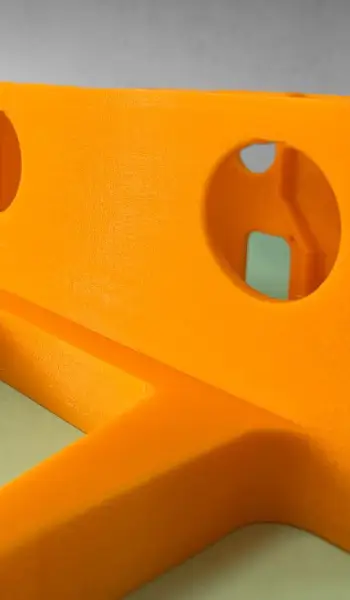
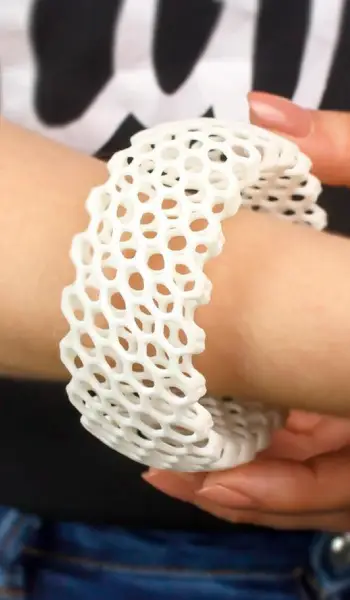
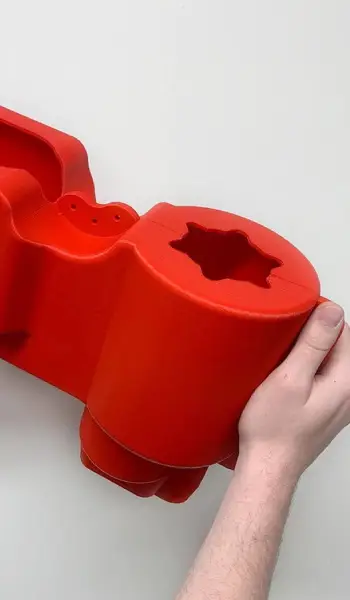
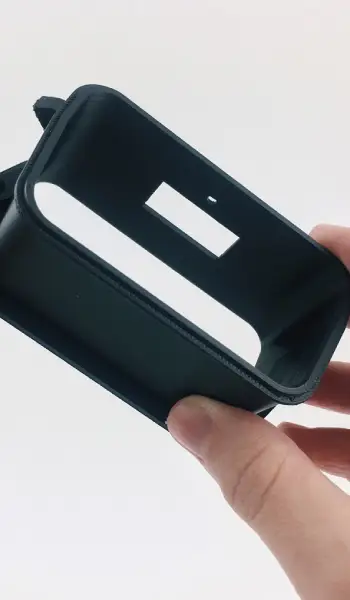
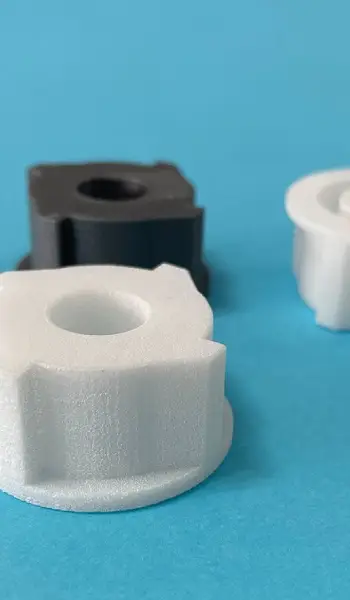
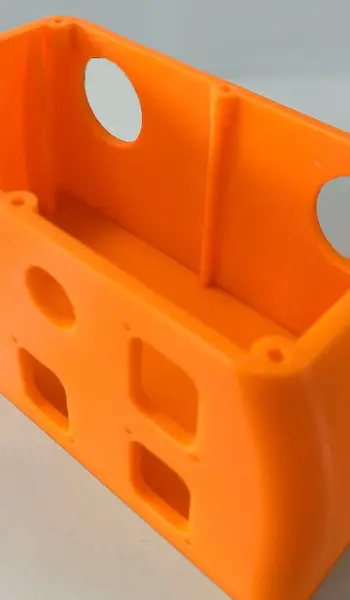
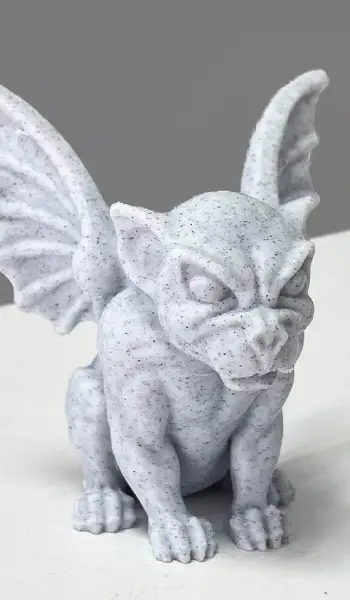
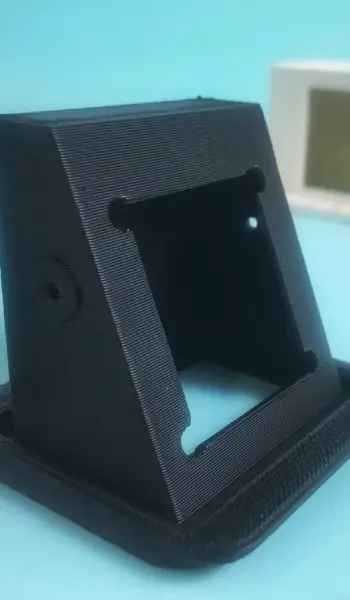
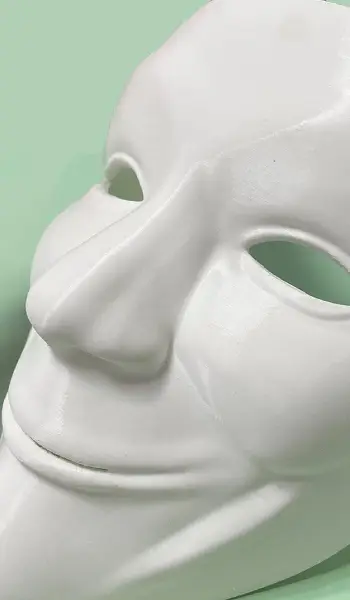
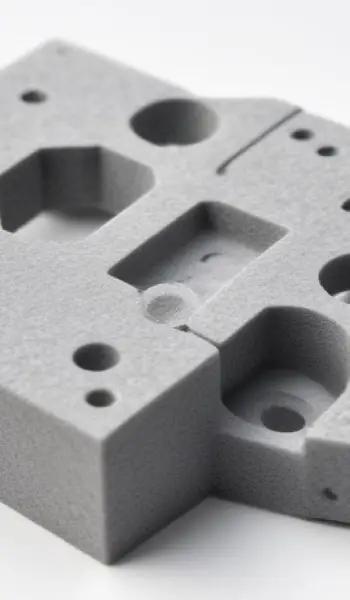
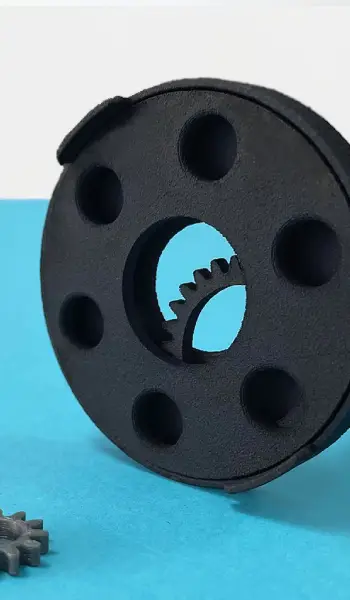
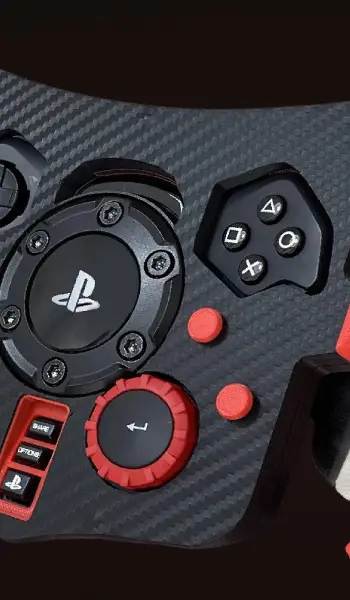
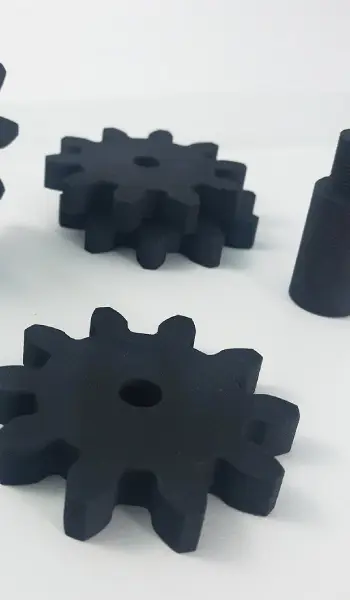
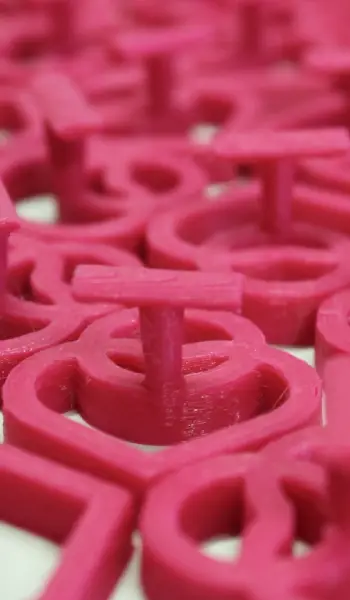
Parts we have made for our clients.
REVIEWS
What our clients.
Publicado en Google


José Maria Garcia
10/10/2026
Menuda eficiencia
Publicado en Google

Pablo H Estrada
25/08/2026
Este cliente valoró sin dejar comentario.
Publicado en Google

Jordi Grabau
08/08/2026
Resultado perfecto.
Gracias!
Gracias!
Publicado en Google

Tony DSM
07/08/2026
Les envíe una pieza específica para realizar de un vehículo y la verdad salió justo con las especificaciones claras de mi archi STL el precio no es barato pero es justo el acabado está bien falta darle una lijada más pero como la pieza se va a pintar no hay problema sin dudas los recomiendo por la sencillez del proceso y la velocidad de fabricación. Adjunto fotos de las piezas realizadas y una foto de la pieza original ya descatalogada a la cual se intenta copiar.
Publicado en Google

Manolo Mano
21/07/2026
Rápidos muy eficientes. Gran calidad
Publicado en Google

Tomás de la Fuente
27/05/2026
Vamos, no soy de poner muchas reseñas (y sólo lo hago si son buenas), pero si el servicio es impecable y rapidísimo, no me queda otra. Simplemente inmejorable. No puedo decir otra cosa.
Publicado en Google

Oscar Abril
24/05/2026
Las partes tienen muy buena calidad y la entrega muy rápida 😄
Publicado en Google

Manuel PeAn
13/05/2026
Este cliente valoró sin dejar comentario.
Publicado en Google

Rubén Romero
11/05/2026
Impresión rápida y con precisión.
Servicio de calidad, repito en breves.
Servicio de calidad, repito en breves.
Publicado en Google

ricardo galavis
06/05/2026
Hice un pequeño pedido de piezas para el coche , se me habían perdido estos adaptadores para las bombillas tienen muy buena pinta chicos de 10 y muy majo gracias te enviaré más cositas más adelante!!
Publicado en Google

Carlos Navarro sanchis
07/04/2026
Este cliente valoró sin dejar comentario.
Publicado en Google

walten
26/03/2026
Buenas, no le pongo una estrella más solo porque el tiempo de envío es muy tardado, entiendo que se tarde en hacer las impresiones pero yo sugeriría más información sobre lo que uno ordeno
En cuanto a la calidad de impresión, excelente, me llegó tal y como puse la medida, limpio y sin ninguna imperfección, espero que sigan con el negocio porque yo estoy seguro de que haré algún pedido en el futuro
Lo recomiendo a la gente paciente, el tiempo lo vale.
En cuanto a la calidad de impresión, excelente, me llegó tal y como puse la medida, limpio y sin ninguna imperfección, espero que sigan con el negocio porque yo estoy seguro de que haré algún pedido en el futuro
Lo recomiendo a la gente paciente, el tiempo lo vale.
Publicado en Google

Domingo Beltrán
03/02/2026
En mi caso dieron asistencia técnica sobre posibles limitaciones que podía tener el diseño que quería imprimir. Fueron honestos y también ofrecieron materiales alternativos como solución
Publicado en Google

Andrea VP
23/01/2026
estaba un poco escéptica después de leer alguna de las reviews. la verdad es que no tengo quejas. me puse en contacto con ellos y me respondieron con rapidez, diciéndome para qué día estaría listo. en mi caso, pedí una impresión pequeña en nylon para reparar una pieza de una cámara. la impresión tardó unos 10 días, después de que entrase en proceso de producción + la entrega al día siguiente. todo ha ido muy bien y la pieza encaja perfectamente en la cámara y con el tornillo que tenía pensando. recomiendo el servicio!
Publicado en Google

Marc Hernández
12/01/2026
Muy profesionales. Les mandé un diseño 3d totalmente generado por inteligencia artificial (con las múltiples inconsistencias e inconvenientes que eso puede suponer) pero aún así han sido capaces de enviarme el pedido con un impresionante resultado final. Muy satisfecho con el proceso, y la atención recibida, sin duda los recomendaría y volvería a trabajar con ellos para futuros proyectos.
Publicado en Google

enrique fernandez
10/11/2025
Acabo de recibir el pedido que realicé.
Las piezas, que tienen partes muy delicadas, están perfectas.
Han venido muy rápido y bien embaladas.
Agradezco la ayuda de Aaron.
Todo correcto, como de costumbre.
Las piezas, que tienen partes muy delicadas, están perfectas.
Han venido muy rápido y bien embaladas.
Agradezco la ayuda de Aaron.
Todo correcto, como de costumbre.
Publicado en Google

Aurelio Tornero
26/10/2025
He pedido varias veces para imprimir figuras de rol para mi campaña de DnD. Mi experiencia en mi caso de uso: calidad inmejorable y servicio exquisito (tuve que cambiar condiciones del envío y sólo me pusieron facilidades)
FREQUENTLY ASKED QUESTIONS
FAQ about SLA 3D printing.
The most common questions we receive about our SLA 3D printing service.
Still have questions?
info@imprimakers.com →
What is the difference between SLA, DLP, MSLA and LCD?
All are technologies of UV light photopolymerisation, but they use different light sources: classic SLA uses a point laser; DLP uses a projector that cures an entire layer at once; MSLA / LCD uses an LCD screen masking UV light. At Imprimakers we use laser SLA for maximum precision and MSLA for volume. The result for the client is practically equivalent.
When should I choose SLA instead of FDM?
Choose SLA when your part needs: fine detail (below 0.4 mm), smooth surface without layer marks, tight tolerances (±0.1 mm), or a special material that only exists in resin: castable for jewellery, optical clear or flexible silicone-like 40A. For large, robust or budget parts, FDM is still better.
How much does an SLA part cost?
A 30 mm miniature in standard resin costs around 5 €. A castable ring runs around 12 a 18 €. A product housing in Tough resin, around 45 a 80 €. The price is calculated automatically with our online calculator instantly.
Are SLA parts strong?
It depends on the resin. The standard resin is rigid but relatively brittle (it breaks before an FDM PLA or ABS). The Tough / ABS-like / Rigid 10K resins greatly improve impact resistance and are suitable for functional parts. For maximum mechanical toughness, SLS with nylon PA12 remains superior.
What is the maximum size for SLA?
The SLA standard is 220×220×220 mm. Para piezas mayores dividimos y ensamblamos en taller. Si tu pieza es muy grande, conviene valorar si FDM (hasta 500×500×500 mm) o SLS (hasta 40×40×40 cm) serían más eficientes para tu caso.
What file formats do you accept for SLA printing?
We accept STL, STEP, STP, IGES, IGS, OBJ, ZIP up to 200 MB per file. For parts with very fine detail, export at high resolution (tolerance ≤ 0.01 mm). If you do not have the file, we offer a 3D modelling service from €25/h.
Do you sign NDAs / confidentiality agreements?
Yes, at no cost. Request it in your first message and we send you the signed clause before you send the files. Your models are deleted when the project closes if requested. Standard working practice with jewellers and R&D teams.