No products in the basket.
Cart
●12 materials · FDM / SLA / SLS
3D printing materials that perfectly fit to any type of project
Technical filaments, resins and powders selected for prototypes, functional parts and series production.
Explore our available materials
12 materials in stock · filter by technology or search by technical property.
 FDM
FDM
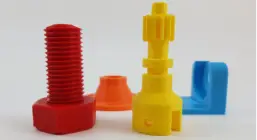
PLA
Biodegradable and low-cost compound for early stage prototyping and shape analysis in part design.
Available in:
+ INFO
 FDM
FDM
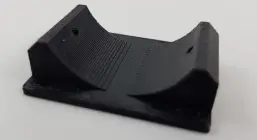
PETG
Recyclable material and suitable for food contact. With some flexibility, perfect for housings with tabs...
Available in:
+ INFO
 FDM
FDM
ABS
Impact resistant and easy to machine. For applications such as electronic housings, automotive parts and LEGO bricks.
Available in:
+ INFO
 FDM
FDM
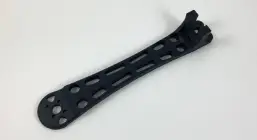
ASA
Improved version of ABS. Greater robustness, resistance to water and UV. Suitable for continuous outdoor use.
Available in:
+ INFO
 FDM
FDM
TPU
Elastic and non-sticky, it can be stretched up to 5 times without breaking.
Available in:
+ INFO
 SLA
SLA
Standard Resin
High level of detail and excellent surface quality. Suitable for pieces with a superfine finish, molds, or role-playing figures.
Available in:
+ INFO
 SLS
SLS
Nylon PA12 (SLS)
Thermoplastic for production of functional parts. For complex assemblies, resistant to chemicals, oils and greases.
Available in:
+ INFO
 SLA
SLA
TPU Resin
The highest quality of detail with SLA printing with the flexibility of rubber or TPU. Handles, grips, overmolds...
Available in:
+ INFO
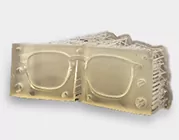 SLA
SLA
High Temp Resin
Up to 289ºC without deformation. For mold and master models for casting and thermoforming operations.
Available in:
+ INFO
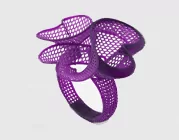 SLA
SLA
Castable Resin
Perfect material for the jewelry and dental sector. To cast directly without traces of ash.
Available in:
+ INFO
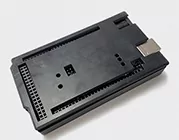 FDM
FDM
PETG ESD
Compound for applications that require protection against electrostatic discharge and good chemical resistance.
Available in:
+ INFO
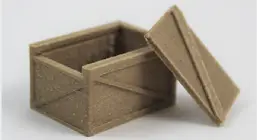 FDM
FDM
Wood PLA
With 20% real wood chips, an incredible wood effect is achieved in elements for models and prototypes.
Available in:
+ INFO
3D materials comparison table
Values from 1 to 5 — 1 lowest, 5 highest. Handy for comparing at a glance.
| Material | STRENGTH | FLEXIBILITY | HEAT RESISTANCE | LEVEL OF DETAIL | PRICE | TECHNOLOGY |
|---|---|---|---|---|---|---|
| PLA | FDM | |||||
| ABS / ASA | FDM | |||||
| PETG | FDM | |||||
| FLEXIBLE | FDM | |||||
| STANDARD RESIN | SLA | |||||
| NYLON PA12 | SLS |
* values from 1 to 5 · 1 lowest · 5 highest
Comparison between our 3D printing technologies
FDM, SLA and SLS — when each one makes sense for your project.
FDM · Filament
FDM
The most popular and versatile technology. It lays down molten filament layer by layer: low cost, a wide range of materials and excellent for rapid prototypes and robust parts.
- Functional prototypes
- Max volume · 50×50×50 cm
- 7 materials in stock
SLA · Resin
SLA
It cures liquid resin layer by layer with a UV light beam. Ultra-high resolution and an ultra-fine surface finish, ideal for jewellery, dental, miniatures and detailed modelling.
- Layer from 25 µm
- Ultra-fine finish
- 4 technical resins
SLS · Powder
SLS
It sinters nylon powder with a laser, with no supports. Dense, isotropic parts and complex geometries; the industrial choice for short runs and functional production.
- No supports needed
- High mechanical strength
- Short runs
FDM vs SLA vs SLS
FDM printing technology is one of the most popular and complex technologies when it comes to designing and preparing files for printing. Among all its limitations, the most important is the need to use supports and the impossibility of obtaining mechanical isotropy. In addition, since you cannot deposit the molten material in the air, it is not possible to directly print bridges or cantilevers, so it is necessary to add support structures.
SLA printing technology is the second most widely used 3D printing technology. Unlike FDM technology, it exposes layer by layer a vat of liquid resin that selectively hardens using a beam of ultraviolet light. Among its advantages, it stands out its high resolution and the excellent surface finish achievable through 3D printing in SLA.
SLS printing technology is probably what we serve most frequently in industrial environments. It consists of using a laser scanning system, which, through layers of powdered material, generates the geometry of the piece. One of the main advantages of ordering parts in SLS is that it gives you the possibility to print without supports, making the design conditions much lower and simplifying the post-processing of the parts. Another important advantage is that the parts printed with this technology are dense and have a high isotropy, making it an ideal technology for the production of functional prototypes.
NDA availableEncrypted files
Free shippingOn orders >€39 (mainland Spain)
In-house productionValencia, Spain
Technical reviewBefore printing