No products in the basket.
Cart
3D printing in TPU RESIN
Flexible TPU resin (thermoplastic polyurethane) is a popular material in 3D printing using SLA, known for its elasticity and versatility. This resin is ideal for creating parts that require flexibility and durability, thanks to its ability to withstand deformation without breaking and its excellent wear resistance. In addition, TPU allows for the creation of precise details and smooth finishes, making it perfect for applications that demand a high level of aesthetic quality.
Its combination of flexibility and strength makes it ideal for functional prototypes and customizable accessories that require both performance and comfort.
Dark greyColor
SLATechnology
8.5 MPaTensile Strength
80 – 85 AShore hardness
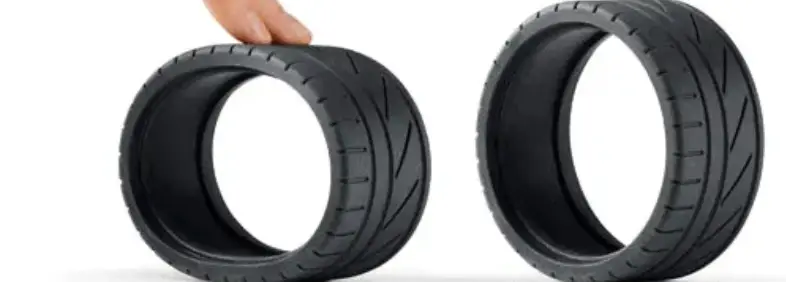

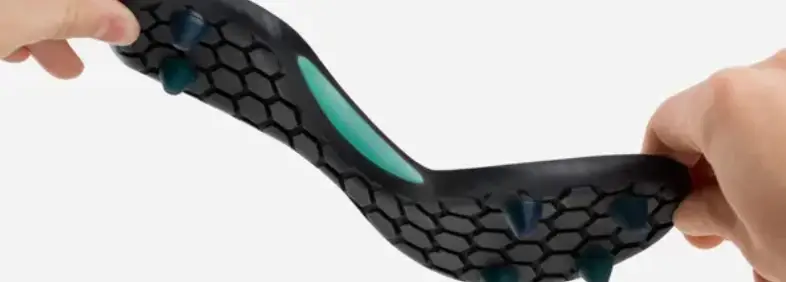
SLA printingResin
In-house productionValencia, Spain
Technical reviewBefore printing
Free shippingOn orders >€39 (mainland Spain)
Advantages and limitations
TPU RESIN: when it is the perfect choice… and when it is not.
Knowing the material’s limits saves you reprints: where it excels and where it does not.
Advantages of TPU Resin Pros
When is the perfect material choice?
- Allows for the creation of precise details and smooth finishes
- Ideal for prototyping parts that would normally be produced in rubber or TPU
- Can stretch up to 120% of its original shape
- Good tensile strength for objects under load
Disadvantages of TPU Resin Cons
When to look for other material options
- Not compatible with skin contact applications
- Supports are hard to remove and can leave behind scarring and nubs
- Not great for printing small cavities or holes
- No custom color options available
Available Colors
TPU RESIN: available color.
The final color may vary slightly depending on the material batch and the orientation of the part. If you need another color, ask us when placing your order.
Dark grey
Another color?
Ask us when placing your order

013D model
02Slicing
03SLA printing
04Final part
Technology used
SLA: stereolithography.
SLA, or stereolithography, is an additive manufacturing process that uses an ultraviolet light laser in a tank to build objects from resin. It is used for the production of both final parts and the creation of models, prototypes, or patterns.
In this case, a 3D model must also be available, which is built by slicing the file into thin layers using specialized software. A support structure is created, where necessary, to manage overhangs and cavities.
Once the layer to be printed has been created, the equipment's lifting platform descends a distance equivalent to the thickness of a solidified resin layer (usually between 0.05 and 0.15 mm). A blade sweeps across the piece, leaving a new layer of liquid resin on the surface of the tank, ready for the next laser printing. In this way, a three-dimensional piece is created layer by layer. Once the piece is complete, it is submerged in a chemical bath that removes the excess resin and then cured in a ultraviolet light oven.
More about SLA 3D printing →
Technical specifications
TPU RESIN: technical properties.
Typical values for the material we use in production. Download the datasheet and the safety data sheet for the full figures.
| Property | Value | Test Method |
|---|---|---|
| Tensile Strength | 8.5 MPa | ASTM D412-06 |
| Tensile Failure | 75-85% | ASTM D412-06 |
| Tear Resistance | 13.3 – 14.1 kN/m | ASTM D624-00 |
| Shore hardness | 80 – 85 A | ASTM 2240 |
Data Sheet
TPU RESIN: technical documentation.
Reference values from the material manufacturer. Final properties depend on orientation, infill and layer height.